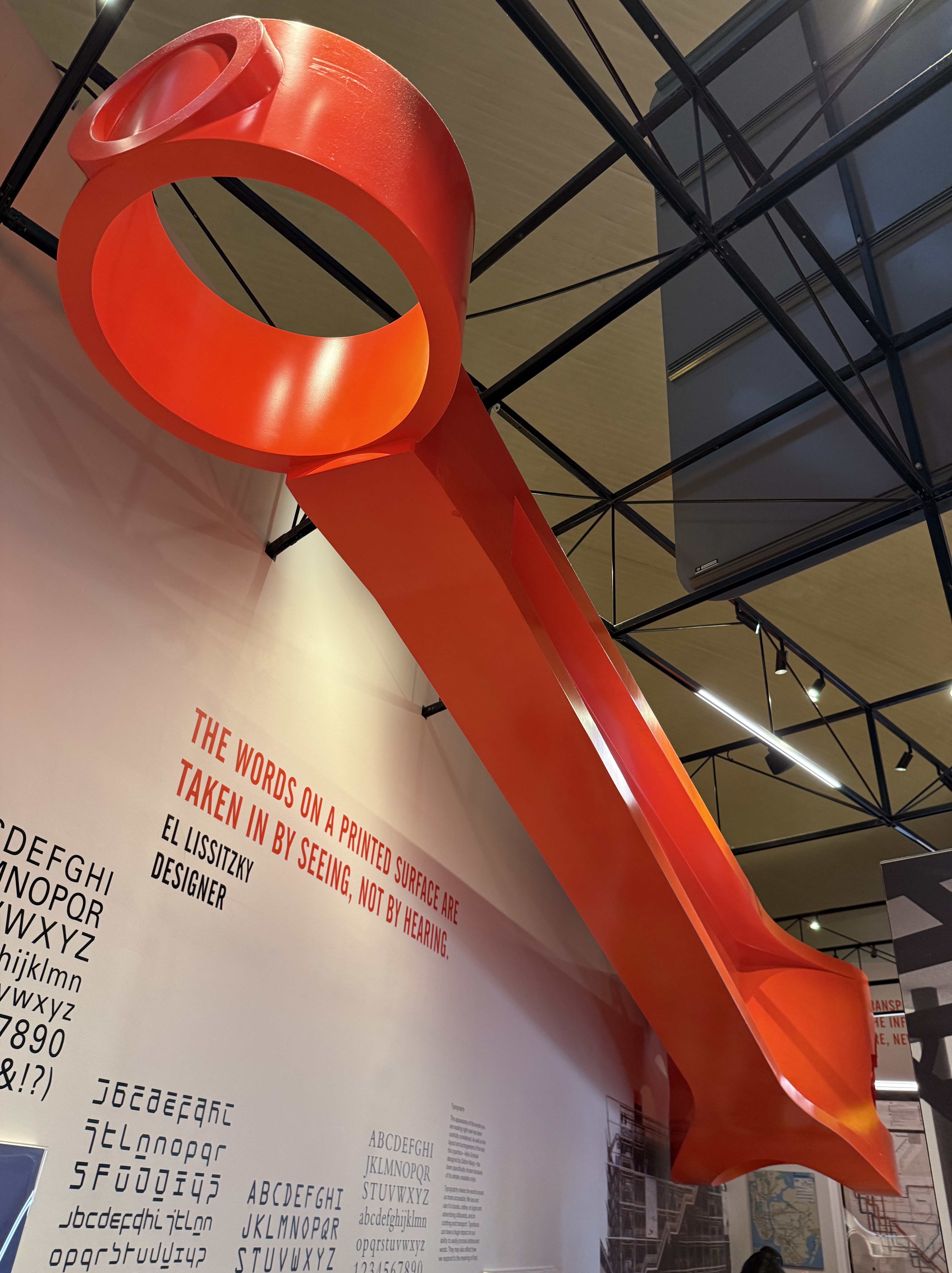
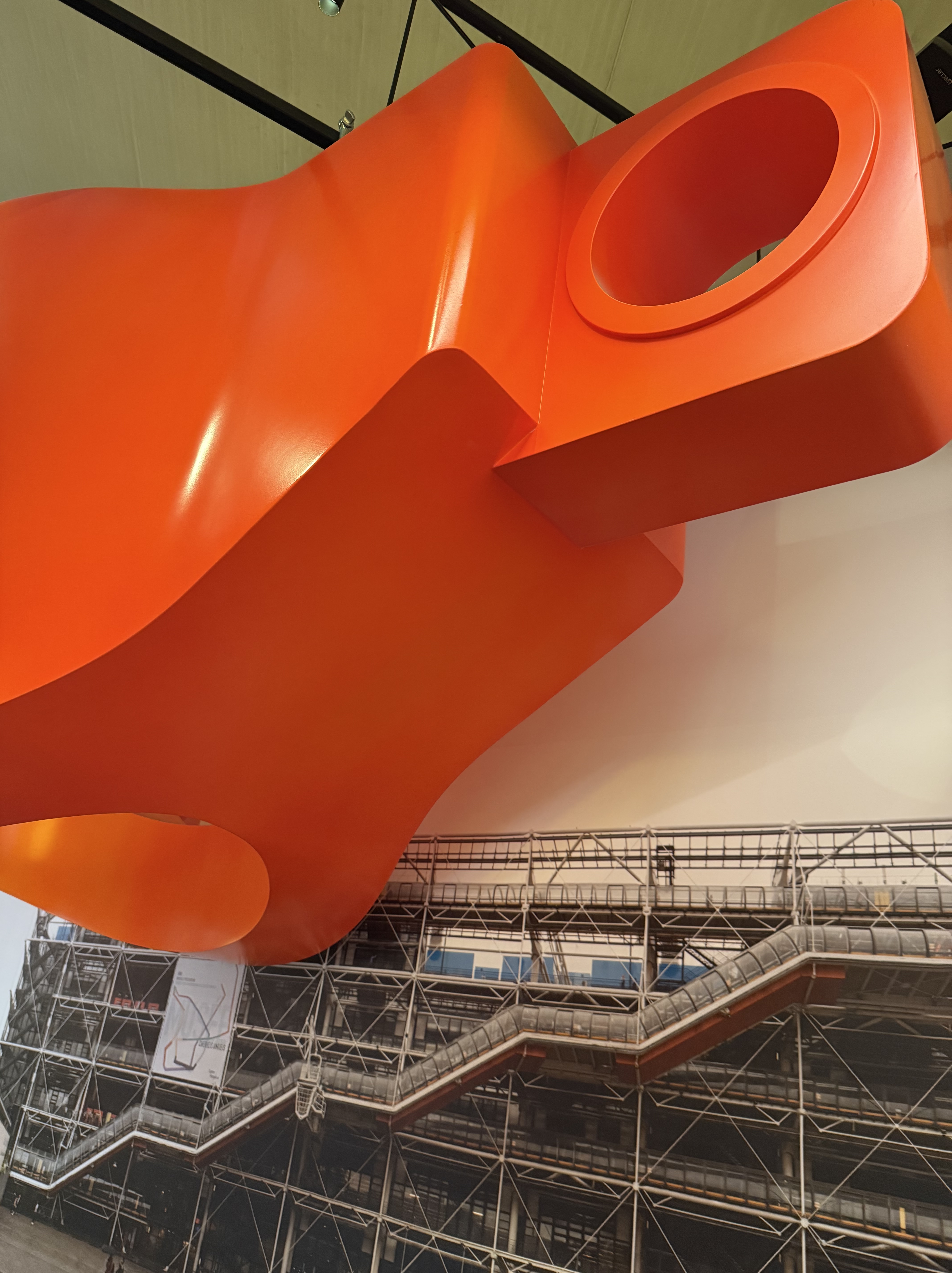
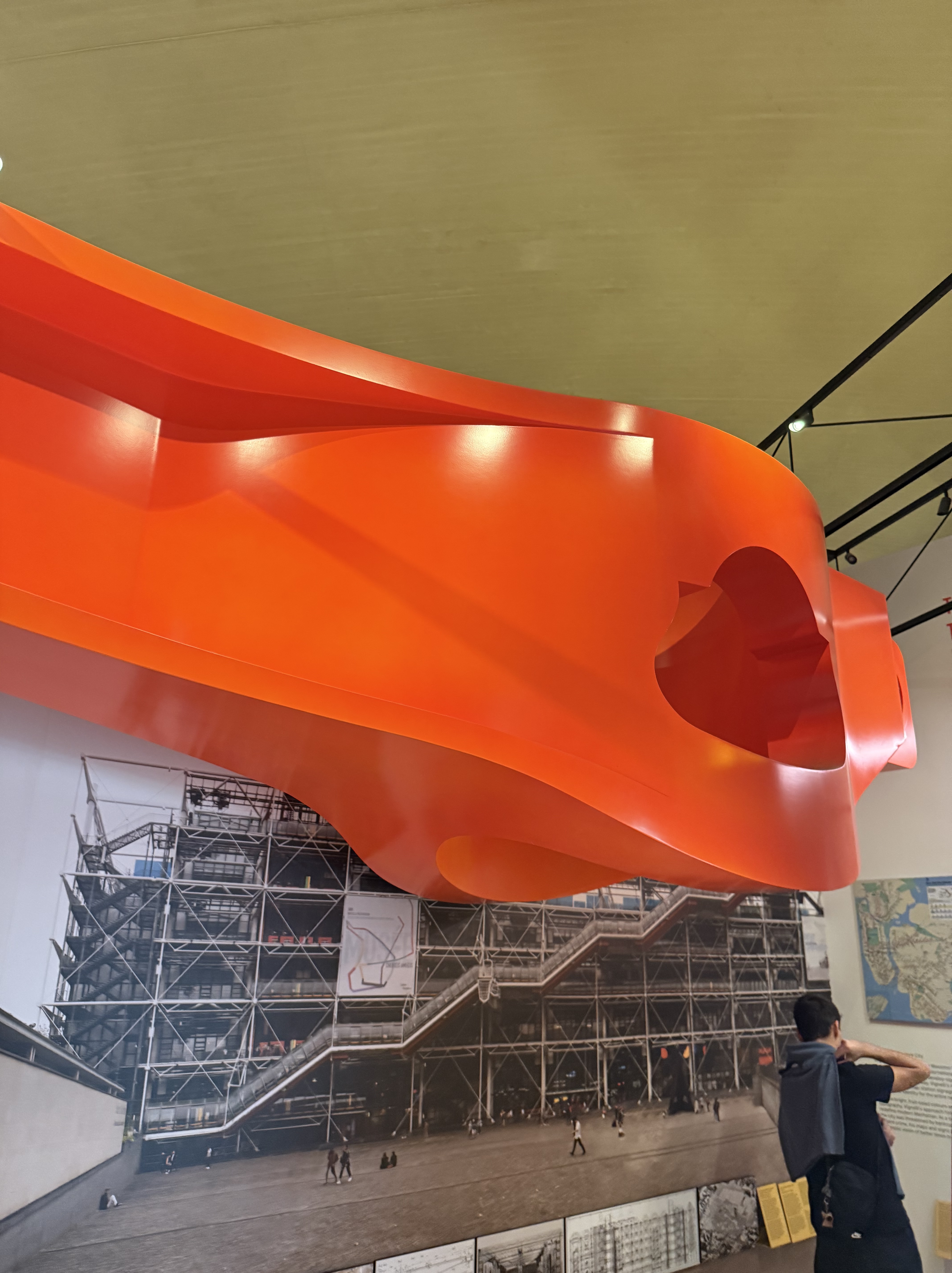
The object I have chosen is a very iconic architectural piece of an iconic building in an iconic architectural city. The Gerberette, designed by engineer Peter Rice, is a very prominent beam in the Pompidou Museum in Paris, France. Completed in 1977 (Renzo Piano Building Workshop, n.d.), it was commissioned by architects Renzo Piano, Richard Rogers and Gianfranco Franchini. At the same time, this approach expressed a new way to see museums: it made them more modern, honest and welcoming to people. I find that by exposing its inner structure, it invites, not just as metaphor but with simplicity, to explore what is exposed within its space.
Displayed in a bright orange colour at the entrance of the exhibition, an impressive, 8-metre-long piece hanging from the ceiling caught my attention (Fondazione Renzo Piano, n.d.). Although presented in orange here, this structure is actually white in the real building (Fondazione Renzo Piano, n.d.), and as we can observe in the images, it stands out from the rest of the structure to highlight the building’s irreverent personality. Made of cast steel, each Gerberette was cast at a foundry in Germany around 1975, then lifted by crane and bolted into place on site.
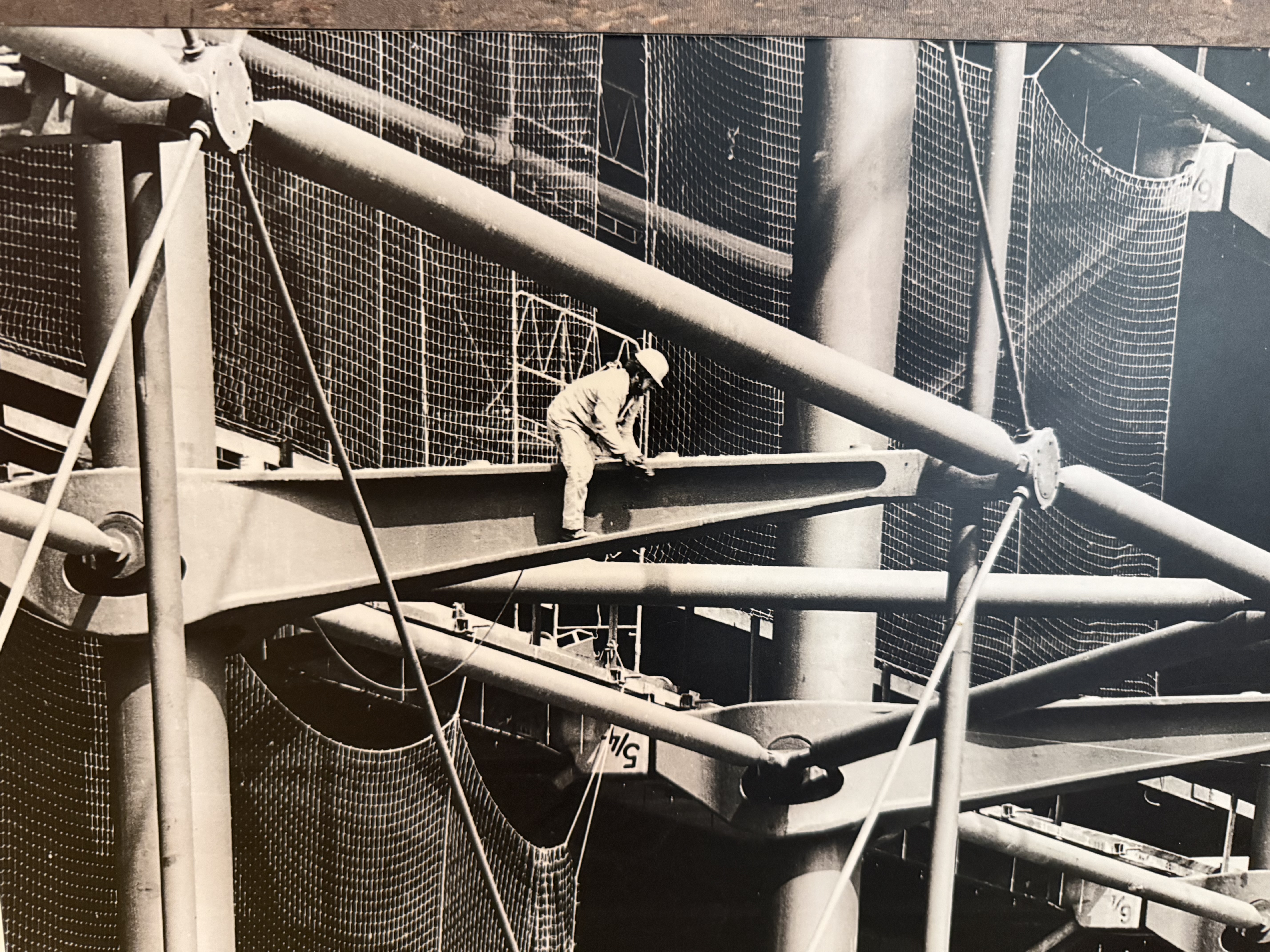
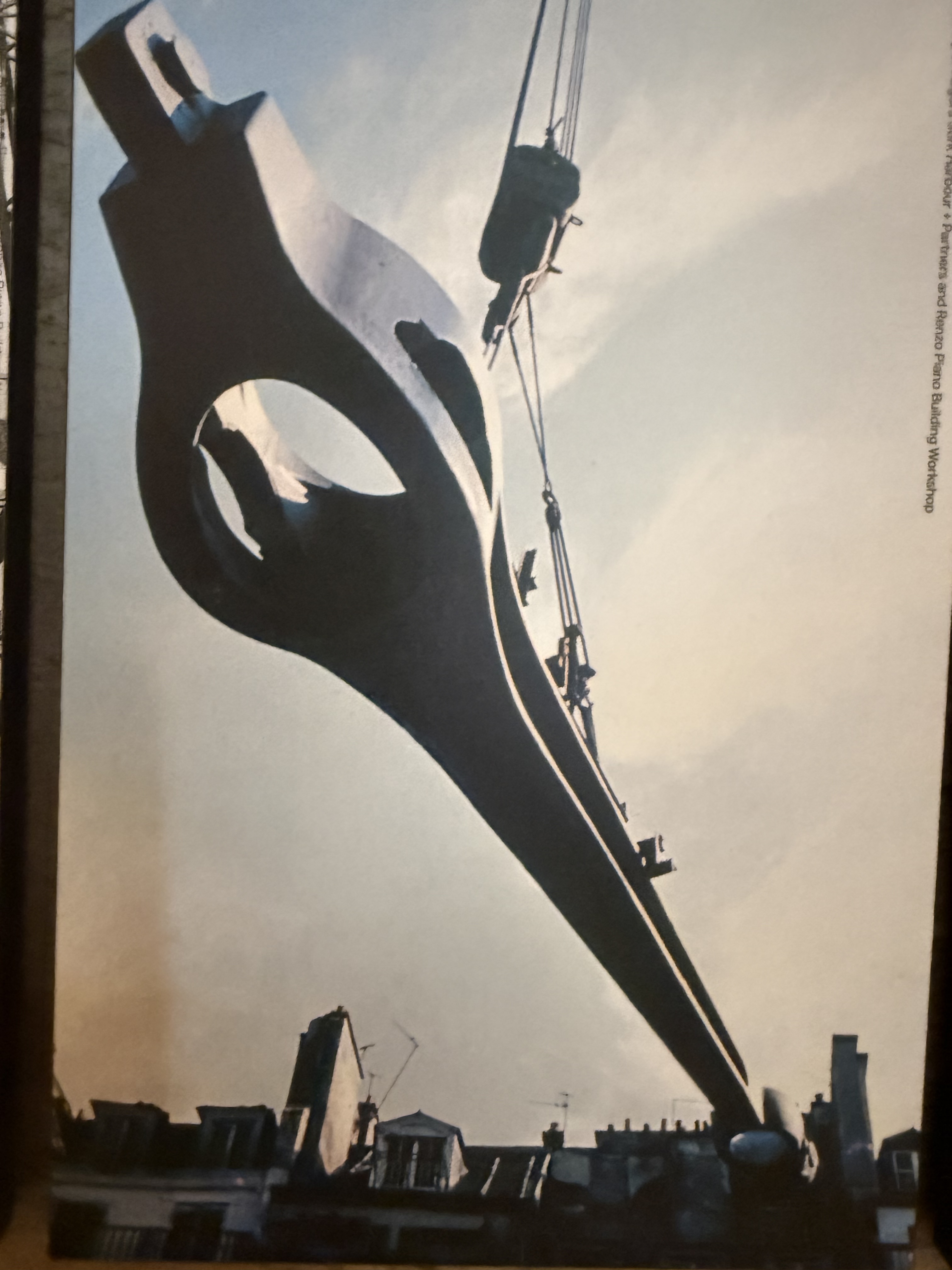
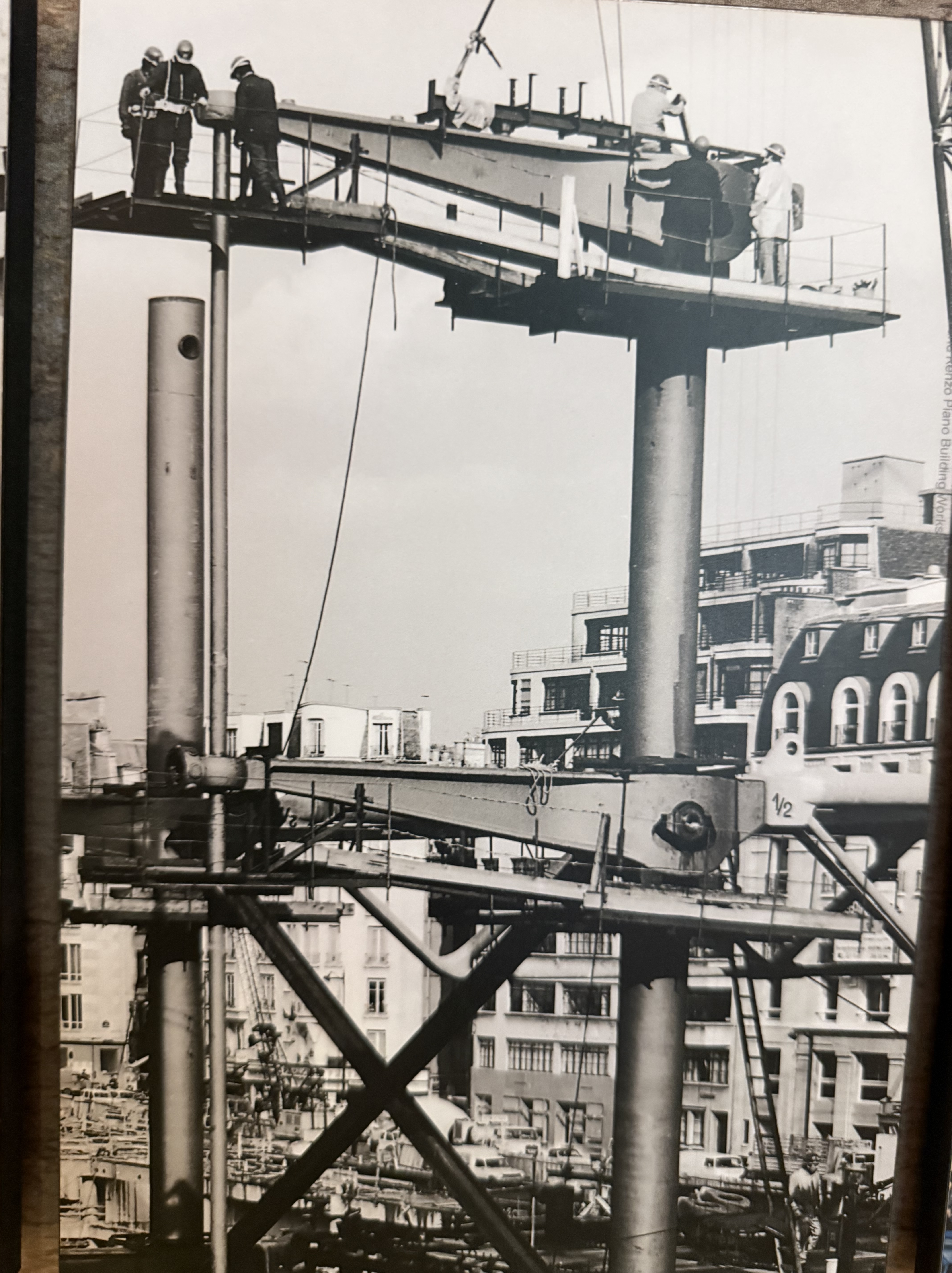
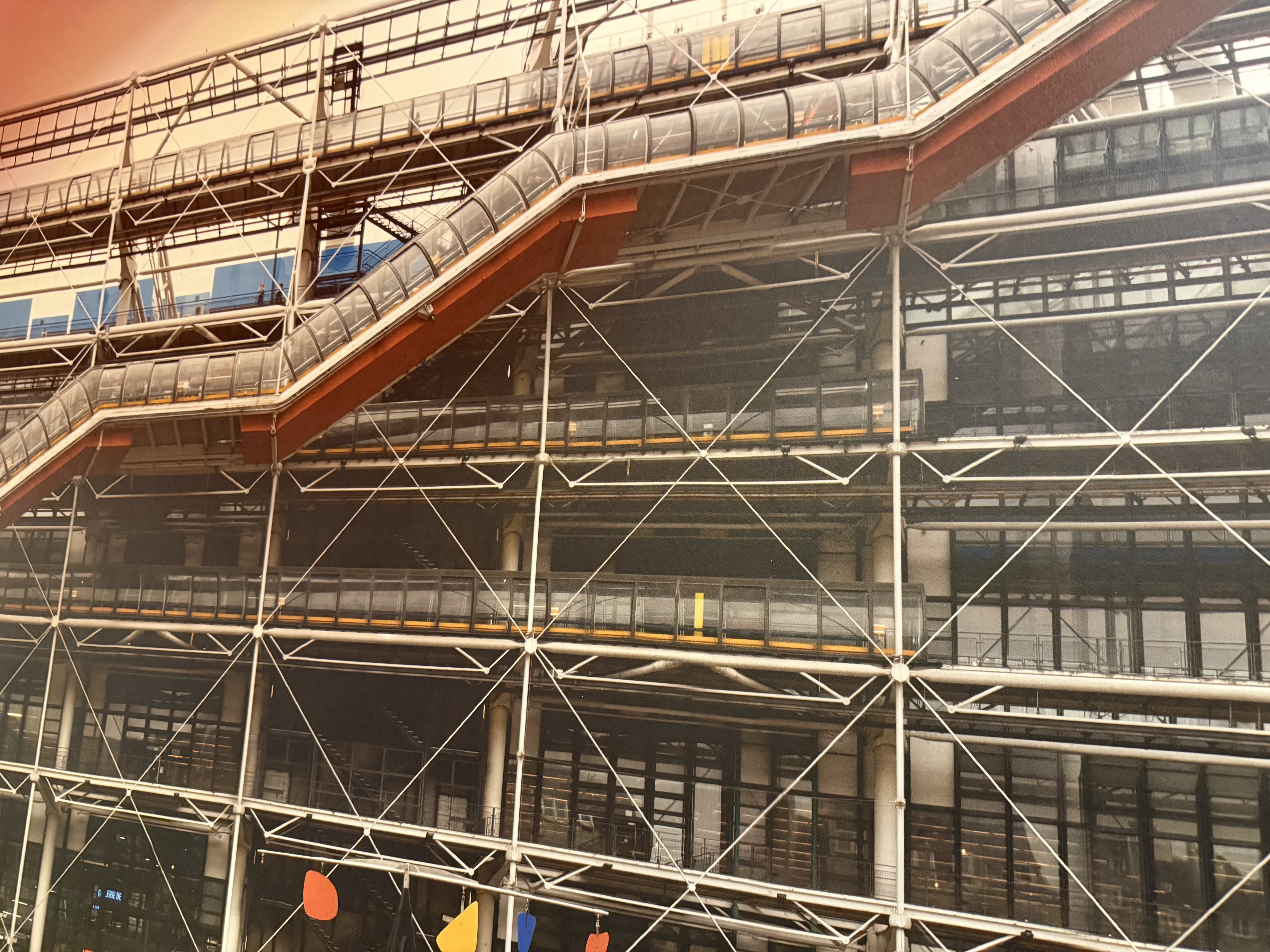
An interesting fact is that with the construction of the Pompidou in Paris, we can start to find a pattern in Richard Rogers’s style. This Gerberette evidences his new approach of making noticeable in the design things like pipes, air conditioning ducts and, in this case, structural parts of the building, that were usually hidden, and exposing them for the public to interact with, making them an important part of its own character. This became part of his signature style, and we can see it evolve in buildings like the Lloyd’s building. This structure opened a new way of architecture (inside-out buildings), leaving an important footprint in architecture history, and it still inspires new constructions all over the world (Hopkins, 2019).
Now this brings an interesting point, taking into consideration our class conversation about originality and authenticity — here a more personal reflection: is it possible that this iconic London building is less original than its predecessor in Paris, being the consequence of the stylistic development of a more innovative Pompidou? In my view, this is certainly the case, but at the same time, it consolidates Rogers’ authenticity by transforming it into a personal style of his. Probably the loss of originality over time, once achieved in the past, can only mean the establishment of an authentic style that works as a signature of the artist.
The fact that high-tech movement buildings are still being designed half a century later shows how important this new way of design still is, not just in an architectural way, but also in how people interact with these frank spaces, more welcoming to everyone.
References
Fondazione Renzo Piano (n.d.) Centre Georges Pompidou. Available at: https://www.fondazionerenzopiano.org/en/project/centre-georges-pompidou (Accessed: 5 November 2026).
Hopkins, O. (2019) High-tech architecture: a guide. Dezeen. Available at: https://www.dezeen.com/2019/11/04/high-tech-architecture-guide/ (Accessed: 5 November 2026).
Renzo Piano Building Workshop (n.d.) Centre Georges Pompidou. Available at: https://www.rpbw.com/project/centre-georges-pompidou (Accessed: 5 November 2026).


Leave a Reply